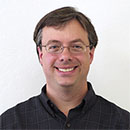
The Lowe LabTodd M. Lowe,
Assistant Professor
Affiliated with |
Large Scale Approaches to Study Whole-Genome Biology
The research in our lab uses a mixture of computational and experimental genomics to study two main areas:
- Identification and characterization of non-coding RNA (ncRNA) genes
On the computational side of the lab, we develop and refine methods to detect RNA genes in genomic sequence using probabilistic models and comparative genomics. We have created RNA genefinders for known classes of RNAs (transfer RNAs, C/D box & H/ACA guide snoRNAs), and seek to identify and model new classes of RNAs that, among other traits, are highly structured or contain stretches of complementarity to other DNA/RNA targets (like microRNAs).
On the experimental side, we assay ncRNA transcriptional profiles via hybridization to in-house generated DNA microarrays, augmented by traditional molecular biology characterization. We believe tight integration of theoretical and experimental approaches is the quickest, most efficient path to discovery.
[More details]- Understanding the unique biology of Archaeal "extremophiles" -- microbes that live at the edge of the limits of life (high/low temperature, pH, salt, pressure)
We have created full genome DNA microarrays for two of the most extreme hyperthermophilic Archaea sequenced to date, Pyrococcus furiosus and Pyrobaculum aerophilum, which natively grow at boiling temperatures. The organisms are particularly mysterious because no genetic systems exist to study individual gene function -- all analyses to date have been biochemical or by computational methods. In collaboration with groups from UCLA and the University of Maryland, we have challenged these organisms in a series of stress conditions to measure global transcriptional response. Grad student Aaron Cozen continues new stress and varied nutrient growth experiments in our own lab.
On the computational side, we analyze our extremophile array data to predict functional roles for genes of unknown function, identify the major players in various cellular stresses, and develop robust functional clusters. By comparing expression profiles from multiple different species that live in similar extreme environments, we hope to identify key genes important for survival under particular extreme conditions. We also use array data with sequence analysis to look for new RNA genes, predict more accurate operon structure, and define Archaeal-specific transcriptional control elements.
[More details]
The lab is currently taking both MCD biology and School of Engineering graduate students who have a keen interest in one or more of these areas. Postdocs with strong backgrounds in RNA biochemistry (esp. small RNAs) or microbiology/prokaryotic physiology (esp. in Archaea) are encouraged to apply to the lab (please send an email and CV to the address below). If you are not currently a graduate student at UCSC, please see information here for CS/Bioinformatics students or here if you are a potential biology graduate student. I only take enrolled grad students after a rotation in the lab (please do not email requests for direct admittance to either program through my lab).
Lab Members
|
Lab Databases
|
|||||||||||||||||||||||||
TeachingBME 110: Computational Biology Tools (Spring 2006) |
||||||||||||||||||||||||||
Regular MeetingsLab Meetings:Thursdays 4-5pm, PSB 319 |
||||||||||||||||||||||||||
| Office: Physical Sciences Bldg, Rm 316 Email: lowe @soe.ucsc.edu Phone:
|
Postal mail: Biomolecular Engineering SOE-2 University of California 1156 High Street Santa Cruz, CA 95064 |
Lab mail & deliveries: MCD Biology Sinsheimer Labs, Rm 134 University of California 1156 High Street Santa Cruz, CA 95064 |